Porous Material#
A porous material such as fibreglass or mineral wool can be used as a sound-attenuating layer, either by itself or as a facing to a solid barrier.
The porous layer attenuates sound partly by reflecting sound (due to the impedance change between air and the material), and partly by converting sound energy into heat as the sound waves travel through the material.
INSUL can predict the sound reduction performance:
- of a layer of porous absorber and also
- the effect of a porous absorber used as a facing on a partition.
Porous Absorber#
To model the performance of a porous absorber alone:
- Select Porous from the INSUL Construction tabs
-
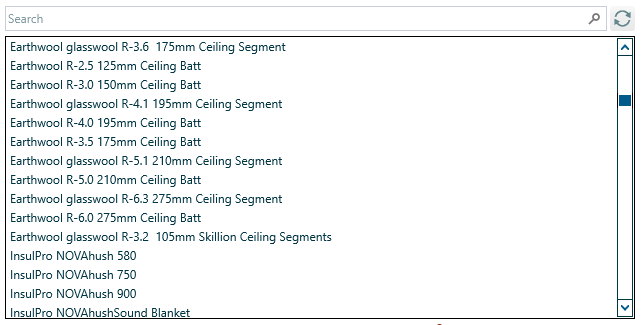
Select a material from the Porous Product list
-
Once a material has been selected, the Material Properties panel to the right of the Porous Product list displays the key material properties: Thickness, Flow Resistivity and Density. Each of these values can be updated directly from the Material Properties panel.

Porous Absorber as Facing#
It is possible to model the effect of a porous absorber as a facing on a partition. This can be done using the Wall, Ceiling, Floor, and Roof construction types.
Note
It is only possible to model a porous absorber as a facing on a single panel
To model the performance of a porous absorber as a facing:
- Select the relevant construction type with the Single panel type selected.
-
On the Frame tab, select the material from the materials list in the Absorption panel.
 3. The INSUL Illustration will show the selected porous material as a facing on the partition, ceiling, roof or floor being modelled.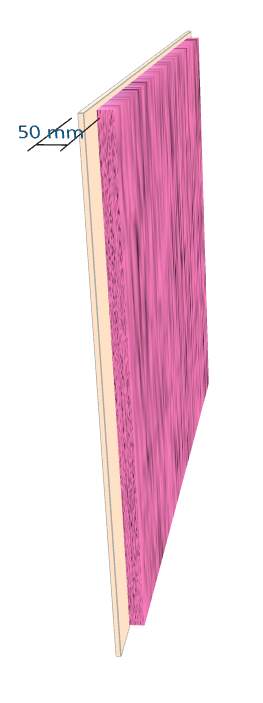
Flow Resistivity#
Flow resistivity is an important parameter for calculating the predicted sound insulation performance of a porous material.
Flow resistivity information can be found either from the Manufacturer of the porous material/acoustic blanket or by relating the flow resistivity to the density using relationships such as those given in Chapter 8 of Beranek's (1971) Noise and Vibration Control.
INSUL provides a calculator tool for estimating the flow resistivity for several common material types based on the material density. The calculator tool is provided on the Material Properties panel on the Porous tab.
To use the Flow Resistivity Estimator to determine the flow resistivity of a specific material:
- Select the matching fibre type of the material in the Fibre Type panel.
- Specify the density of the product by entering the density into the corresponding text box.
-
The Flow Resistivity text box will automatically update and show the calculated flow resistivity.

Note
The text in the Flow Resistivity text box cannot be edited