Floating Floors#
Overview#
INSUL includes options to predict floating floors such as might be used in a Radio or TV Studio or plant room where extreme performance is required.
To model a floating floor, select the appropriate frame type. Suitable frame types include:
Floating Floor frame types |
|---|
| Akustik+Sylomer®25 Floor Mounts |
| Akustik+Sylomer®30 Floor Mounts |
| AMC FZH+Sylomer floor mounts |
| Batten & Cradle |
| Getzner AFB |
| Kinetics RIM |
| Mason FSN |
| Plastic foam underlay |
| Stravifloor Jackup-R (Elastomers) |
| Stravifloor Jackup-R (Springs) |
| Stravifloor Jackup-E |
| Stravifloor w/ HR50 |
Some further comments about selected floating floors are included below.
Mason FSN Mounts#
Mason FSN mounts types of system are typically used in a "jack-up" system in which concrete is cast on to a polythene sheet with the spring mounts cast into the structure. Later, when the concrete is set the whole floor is jacked up on the mounts.

Kinetics RIM Mounts#
Kinetics RIM types of system are typically "cast in place", where rubber coated fibreglass mounts are used with a plywood shuttering and concrete topping.
Plastic Foam Underlay#
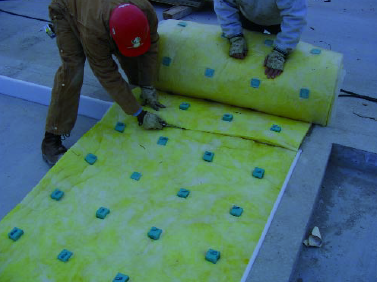
A common form of floating floor, which may in fact be done for thermal reasons is to cast a slab on top of a 50-100 mm thickness of polystyrene. The "Plastic foam underlay" can be used for this construction.
Batten & Cradle#
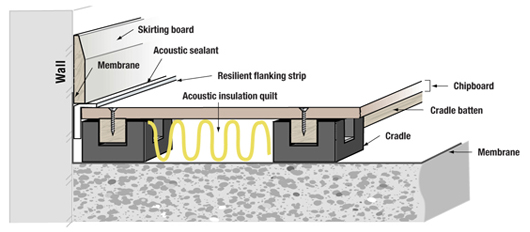
Another form of floating floor is to use rubber or neoprene blocks supporting timber or steel battens overtop of which are fixed sheets of plywood or particle board flooring. In New Zealand, a proprietary system is Batten & Cradle, but similar systems are available in other regions.